

The CRM is still the center of gravity in most GTM systems. Even as the stack has expanded into enrichment tools, engagement platforms, warehouses, call intelligence, routing systems, and automation layers, the CRM is usually where the business expects the truth to land.
Accounts. Contacts. Leads. Opportunities. Activities. Owners. Stages. Notes. Tasks. Forecast categories. Renewal dates. Pipeline history.
That is the operating memory of the revenue team. If AI agents are going to do useful GTM work, they need reliable access to that memory.
That is why every CRM needs an official MCP server.
The CRM Was Built For Human Operators
Most CRMs were designed around a human sitting in front of a UI. A rep opens an opportunity. A manager inspects a dashboard. RevOps updates a field. An admin configures a workflow. A sales leader reads a forecast view.
The API exists, but it usually sits behind the human workflow. It is there for integrations, migrations, syncs, and custom tooling.
Agents invert that model. For an agent, the API is not a secondary surface. It is the product.
An agent does not need a prettier dashboard. It needs to ask which accounts changed stage this week, which opportunities have no next step, which contacts are tied to an open deal, which field is safe to update, what changed since the last pipeline review, which records should not be touched, and which actions require approval before execution.
The CRM becomes a machine interface. Most CRM APIs can technically support some version of this. But technically possible is not the same thing as agent-ready.
The Problem With Custom CRM Integrations
Every team building a GTM agent runs into the same early problem. The agent needs CRM data, so someone writes a connector.
At first, this seems manageable. Query records. Fetch an opportunity. Update a task. Add a note. Maybe create a contact.
Then the real work starts. Authentication has to be handled. Permissions have to be scoped. Field names differ by workspace. Custom objects exist. Required fields vary. Pagination behaves differently. Rate limits show up. Sandboxes are different from production. Webhooks need retries. Change events are incomplete. Duplicate records confuse the agent. A field that looked safe to update turns out to be owned by another system.
Eventually, the connector is not a connector anymore. It is a thin CRM integration platform. And every company repeats the same work.
This is the integration tax that MCP should reduce.
What An MCP Server Actually Changes
MCP, the Model Context Protocol, gives agents a standard way to discover and use tools exposed by external systems. For a CRM, that means the CRM can expose a controlled set of agent-callable capabilities instead of forcing every builder to wrap the API from scratch.
A good CRM MCP server should not expose the entire CRM as a raw database. That would be dangerous and hard to reason about. It should expose high-level tools that match how agents actually need to work.
At minimum, that includes search records, get record by ID, query records by object and filter, create a record, update a record, add a note, create a task, read activity history, inspect schema and field metadata, and subscribe to meaningful changes.
For GTM agents, the important layer goes further: get account context, get opportunity context, find stale opportunities, find missing required fields, check field ownership before write, propose an update without executing it, and explain required approvals for an action.
That last set matters because CRM agents should not just be able to write. They should understand the consequences of writing.
Official Matters
Community MCP servers are useful for experimentation. They help builders prove the pattern. But CRMs need official MCP servers because production CRM access is not a hobby project.
An official server can understand the CRM's permission model. It can respect workspace configuration. It can expose object metadata correctly. It can inherit user identity. It can log actions in the native audit trail. It can distinguish safe writes from destructive writes. It can handle version changes when the underlying API evolves.
An unofficial wrapper usually cannot do all of that reliably. The CRM is not just another SaaS tool. It is a system of record. If an agent updates the wrong opportunity stage, changes ownership, merges the wrong account, or writes over enrichment data, that can affect forecasting, compensation, routing, reporting, and customer experience.
The closer the agent gets to the CRM, the more governance matters.
Read, Write, And Approval Boundaries
The simplest way to think about a CRM MCP server is through action boundaries.
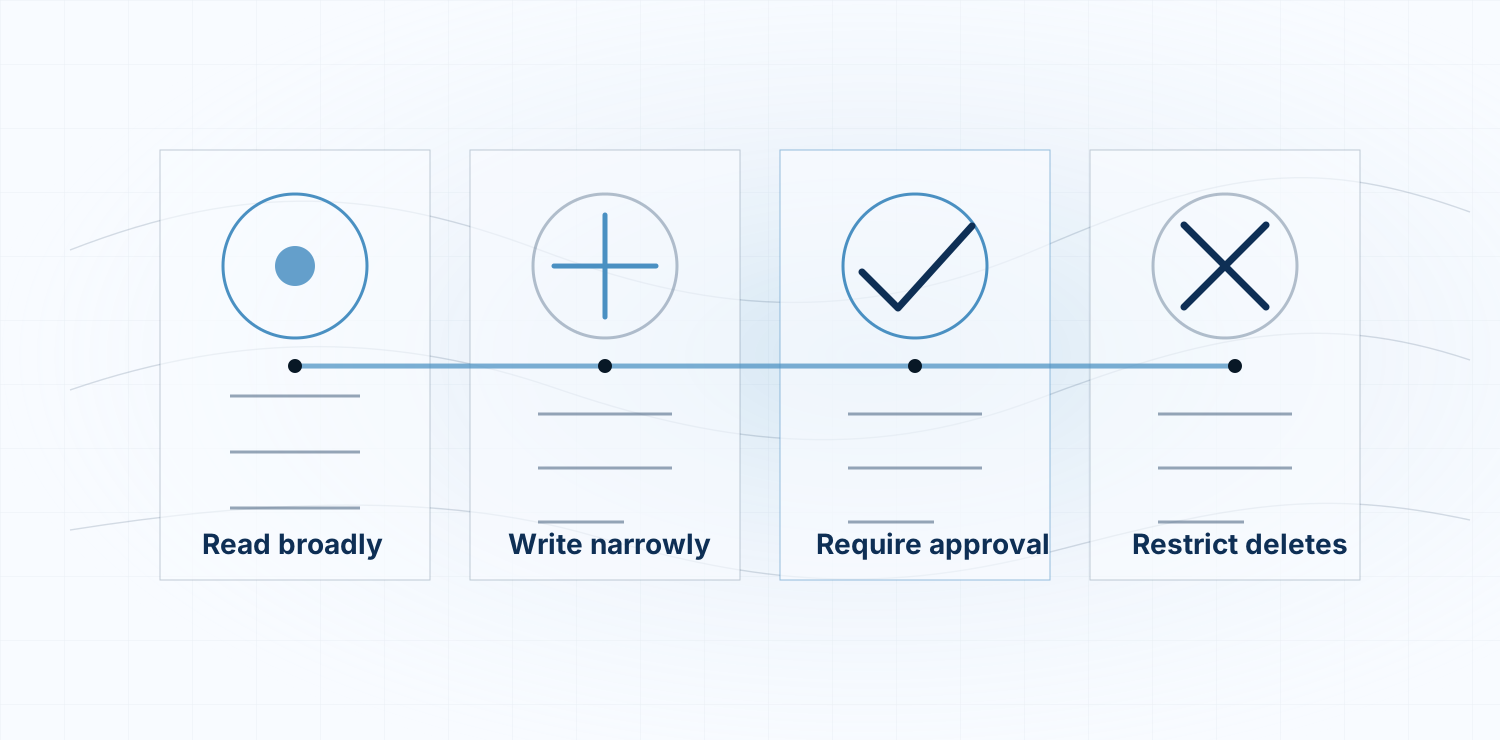
Read actions should be broad but logged. An agent should be able to inspect pipeline, review account context, check activity history, and identify missing data without asking for approval every time. Read access is where agents create immediate leverage.
Safe writes should be narrow and reversible. Creating a task, adding a note, or drafting a next step is usually low-risk. These are good candidates for autonomous execution, especially when logged clearly.
Sensitive writes should require approval. Changing an opportunity stage, overwriting owner fields, updating forecast categories, modifying lifecycle status, enrolling someone in a sequence, or bulk-editing records should require a human checkpoint.
Destructive actions should be heavily restricted. Deletes, merges, mass updates, and permission changes should either be blocked entirely or routed through explicit approval workflows.
This is where an official MCP server becomes more than a protocol endpoint. It becomes part of the CRM's governance model.
The CRM MCP Server Should Know The Data Model
The most important CRM problem is not CRUD. It is context. Agents need to understand the shape of the workspace they are operating inside.
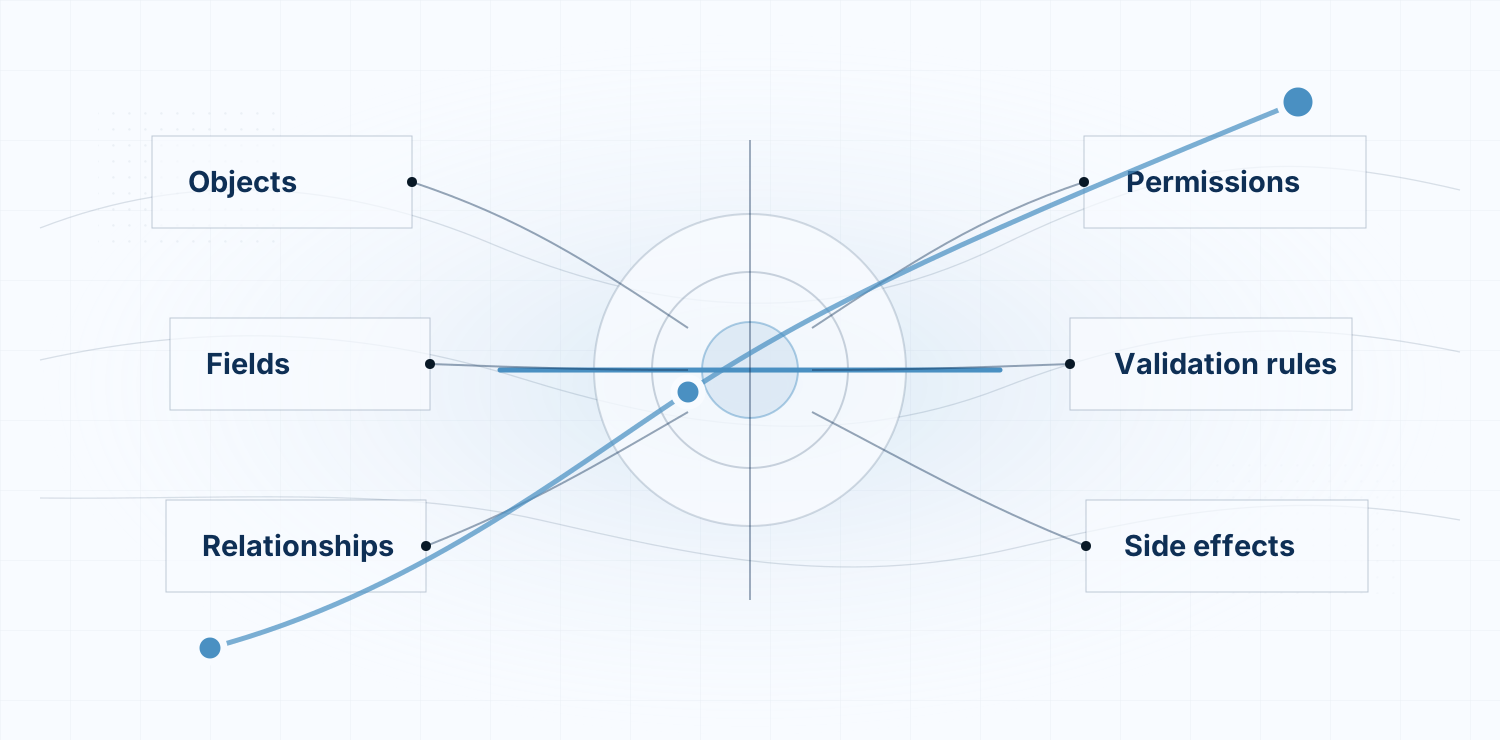
What objects exist? Which fields are required? Which fields are custom? Which fields are calculated? Which fields are owned by enrichment? Which fields are synced from the warehouse? Which records are archived? Which relationships matter for pipeline analysis?
Without that context, the agent will either be too timid to act or too confident in the wrong abstraction.
An official MCP server should expose schema and metadata as first-class context: object definitions, field types, picklist values, required fields, relationship maps, field-level permissions, last modified timestamps, source-of-truth hints, validation rules, and automation side effects.
That last one is easy to miss. In a CRM, a write is rarely just a write. Updating one field can trigger workflows, routing rules, notifications, reverse ETL syncs, reporting changes, and downstream automations. An agent needs to know that before it acts.
The First CRM To Get This Right Defines The Pattern
The market is already moving. Attio is making CRM actions available from AI interfaces and adding developer-facing agent tools. Close has a remote MCP server. Gong is exposing revenue intelligence through MCP so other enterprise agents can access deal context. Workato and n8n are turning automation systems into agent-accessible infrastructure.
The direction is clear: GTM systems are becoming agent-callable. But the CRM layer is the most important one to get right because it anchors the rest of the stack.
If the CRM exposes a strong MCP server, the agent layer gets a stable foundation. If the CRM does not, every GTM agent builder has to keep wrapping the same APIs, rediscovering the same permission problems, and rebuilding the same context layer.
The first CRM that gets this right will not just have another integration feature. It will become easier to build on.
What To Look For
If I were evaluating a CRM MCP server for agent-native GTM work, I would look for six things.
First, identity-aware access. Agent actions should inherit the authenticated user's permissions or operate through a clearly scoped service identity. No vague superuser access.
Second, schema discovery. The agent should be able to understand objects, fields, relationships, validation rules, and permissions before it queries or writes.
Third, safe write patterns. The server should separate low-risk writes from sensitive writes and destructive actions.
Fourth, approval hooks. The server should support propose-before-execute flows so an agent can draft an action, explain its rationale, and wait for approval.
Fifth, auditability. Every agent action should be logged with who initiated it, what tool was called, what changed, and why.
Sixth, change awareness. The server should expose meaningful record changes so agents can respond to pipeline movement, stale deals, missing activity, and data quality issues without polling blindly.
That is the difference between an API wrapper and an agent-ready CRM interface.
The Bigger Point
Every CRM already has an API. That is not enough anymore.
Agents need a safer, more contextual, more discoverable interface to revenue data. They need tools that reflect how GTM work is actually done, not just endpoints that mirror database operations.
MCP is the most interesting emerging standard for that interface. But the standard only matters if CRMs use it to expose the right layer: records, context, permissions, approvals, audit logs, and safe actions.
Every CRM needs an MCP server because the next generation of GTM systems will be operated by humans and agents together.